From Coastal Approach to Landfall: A Process-Oriented Framework on Tropical Cyclone Landfall Activity in the Western North Pacific
Department of Atmospheric and Oceanic Sciences / Institute of Atmospheric Sciences, Fudan University, Shanghai, China
Typhoon Science and Technology Research Center, Yokohama National University, Yokohama, Japan
* Correspondence: fudeyasu-hironori-dt@ynu.ac.jp
Abstract
Tropical cyclone (TC) landfall is a major contributor to coastal hazards over the western North Pacific (WNP). Yet previous studies have focused mainly on landfalling TCs themselves, leaving the question of why some approaching TCs make landfall and others do not insufficiently understood.
We introduce a process-oriented framework that separates coastal approach activity from landfall efficiency — the fraction of approaching TCs that eventually make landfall — using best-track data from 1979 to 2025 across six WNP coastal countries.
Landfall = exposure × efficiency
Regional differences in landfall frequency arise from the combined effects of how many TCs approach the coast and how efficiently they convert into landfalls.
Approach drives variability
Interannual variations in landfall activity are primarily controlled by approaching TC frequency; landfall efficiency mainly shapes climatological contrasts among countries.
Divergence starts early
Landfalling and non-landfalling approaching TCs already differ in genesis location, first approach characteristics, and post-approach track evolution.
These results show that landfall should be regarded as the final stage of a continuous process from genesis to coastal approach and eventual landfall — not as an isolated event. The framework offers a more comprehensive perspective for comparing TC landfall activity across coastal regions.
Keywords: Tropical cyclone; coastal approach; landfall efficiency; western North Pacific
1. Introduction
The western North Pacific (WNP) is the most active tropical cyclone (TC) basin in the world, accounting for nearly one-third of global TC genesis and exposing densely populated coastal countries in East and Southeast Asia to some of the highest TC risks worldwide.
High coastal exposure
Numerous TCs form over warm tropical oceans and track toward populated coasts, threatening lives, infrastructure, and socioeconomic activities.
Landfall dominates impacts
Landfalling TCs produce the greatest societal impacts through destructive winds, extreme rainfall, storm surges, and widespread flooding.
Extensive prior work
Previous studies have examined TC genesis, frequency, intensity, tracks, and landfall climatology, greatly improving our understanding of TC activity from genesis to landfall.
Previous studies have predominantly treated TC landfall as an isolated event, with relatively little attention to the preceding coastal approach process. In reality, landfall is the final outcome of a continuous evolution from genesis → coastal approach → landfall. The observed number of landfalling TCs is therefore jointly determined by how many TCs approach the coast and how likely those approaching storms are to make landfall — but the relative roles of these two components remain poorly quantified.
To address this gap, this study develops a unified framework across multiple coastal countries in the WNP, introducing two key concepts:
Approaching TCs
TCs that first enter a standardized 300-km coastal buffer surrounding each coastal country — storms with direct potential to affect the coastline.
Landfall efficiency
The proportion of approaching TCs that eventually make landfall, separating coastal exposure from the final landfall outcome.
Based on this framework, we address three scientific questions:
- How do the climatological characteristics and long-term variability of approaching and landfalling TCs differ among coastal countries?
- To what extent is landfall activity controlled by the number of approaching TCs versus landfall efficiency?
- What distinguishes approaching TCs that eventually make landfall from those that do not?
2. Data and Methods
We combine a unified 300-km coastal buffer with best-track data to separate coastal approach from landfall. The overall workflow proceeds as follows.
TC data
We use the CMA-STI best-track dataset, providing six-hourly TC center positions and intensities (maximum sustained wind speed as the primary metric). The analysis is restricted to the satellite era 1979–2025, covering the WNP basin north of the equator and west of 180°E, including the South China Sea.
Landfall and coastal boundaries
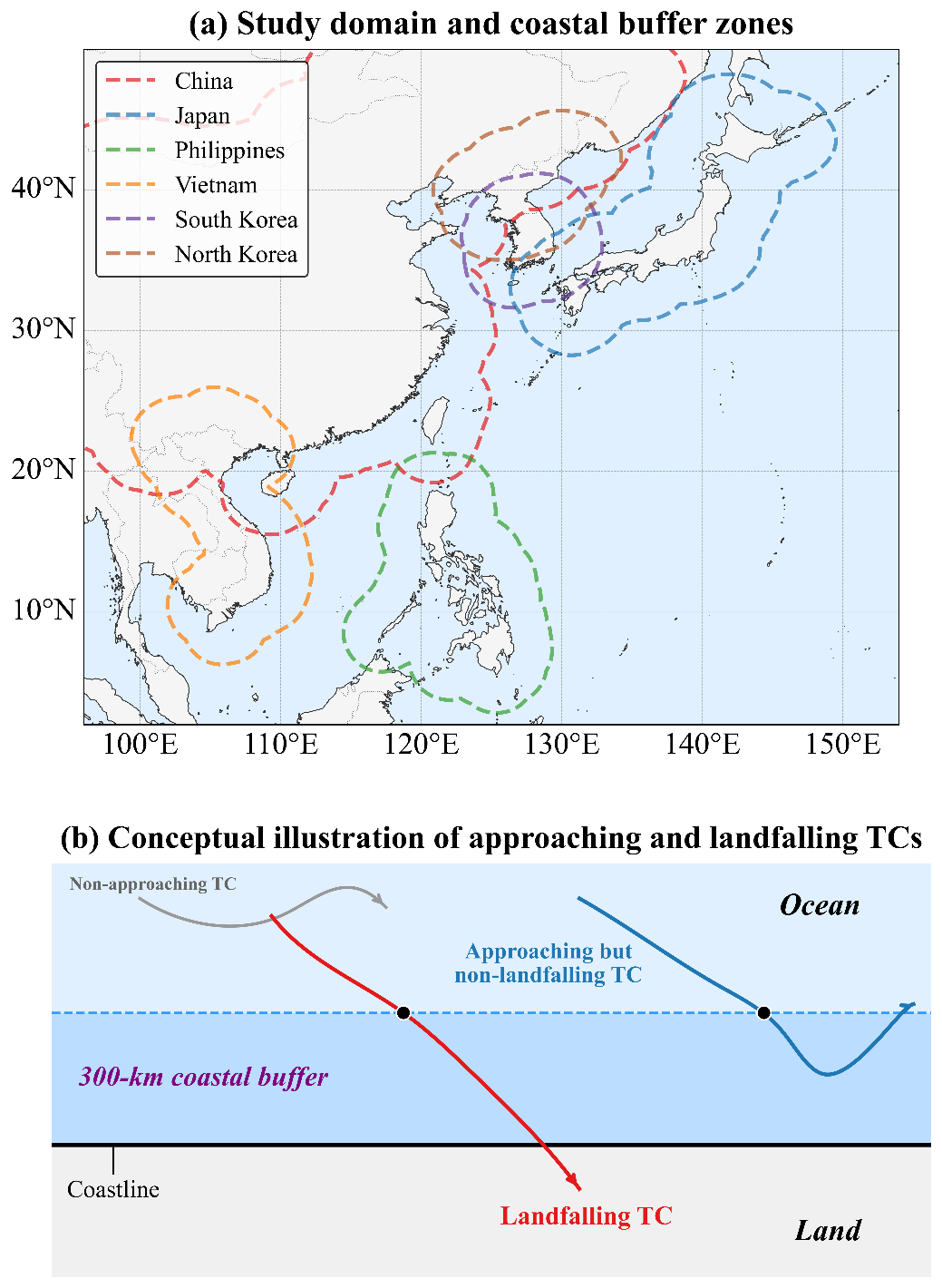
A landfall is recorded when the TC center crosses the coastline of a target country from ocean to land. Only the first landfall within a country is counted to avoid repeated counting. Coastline polygons were manually constructed for six countries: China, Japan, the Philippines, Vietnam, South Korea, and North Korea.
Approaching TCs and the 300-km coastal buffer
An approaching TC is one whose center enters a 300-km coastal buffer around a target country — a practical threshold representing potential coastal influence while remaining distinct from direct landfall events.
Identification and landfall efficiency
Each TC is classified by its interaction with the buffer and the coastline. The first intersection with the buffer defines the first approaching location; for TCs born inside the buffer, the genesis location is used. Approaching TCs are then split into landfalling and approaching-but-non-landfalling categories.
Statistical analyses
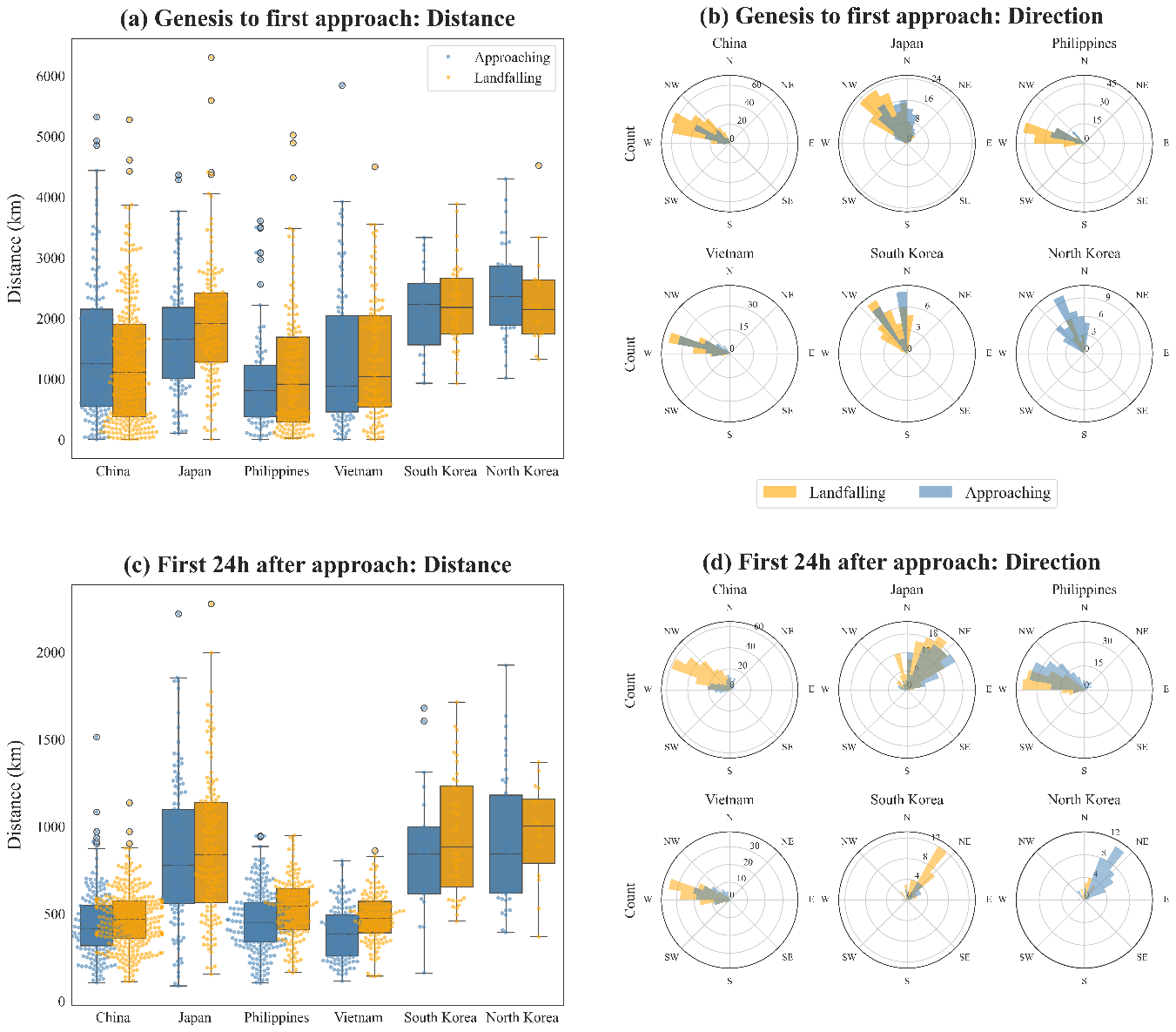
For each approaching TC we computed the distance and azimuth from genesis to the first approaching location, as well as the movement during the first 24 h after entering the buffer. Linear regression was used for decadal trends (Student's t-test); Pearson correlation quantified relationships between approaching and landfalling frequencies across countries.
3. Results
Landfall activity varies widely across the six WNP coastal countries. Here we show how approaching frequency, landfall efficiency, and post-approach evolution jointly shape these regional differences.
(highest)
(highest)
efficiency
correlation
3.1 Climatological characteristics
China has by far the largest coastal exposure, followed by the Philippines, Japan, and Vietnam. The two Koreas experience only 1.3 approaching TCs per year. Landfall frequency follows the same ranking, but the relative gaps between countries narrow considerably.
Annual mean number of approaching TCs (1979–2025).
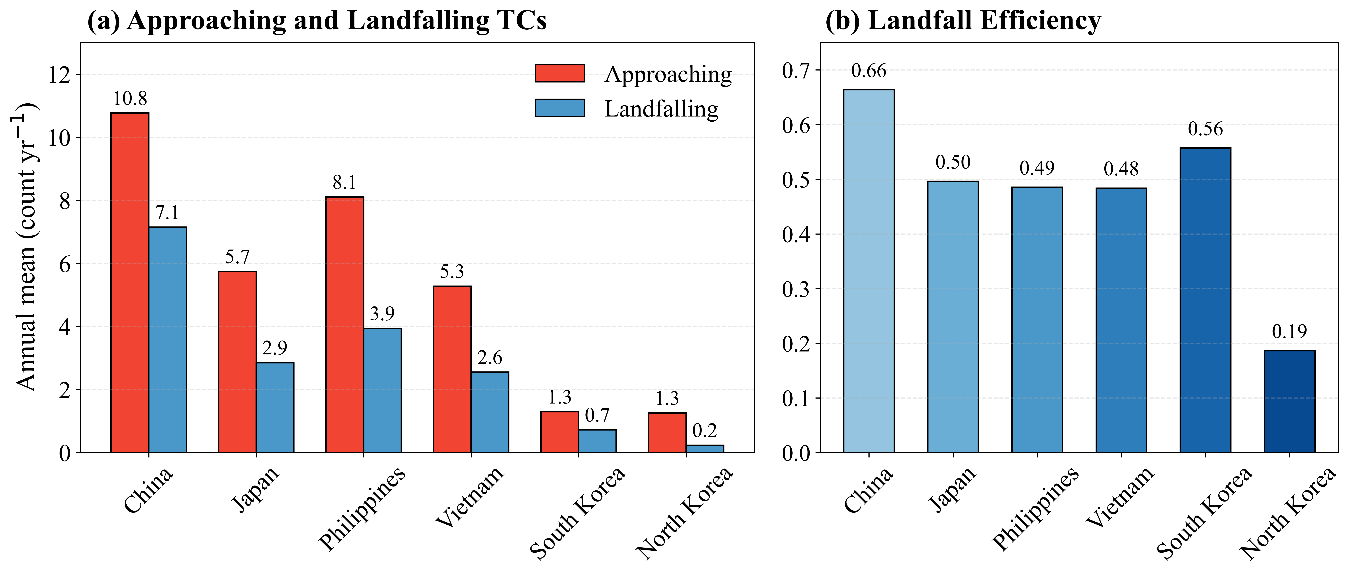
Landfall efficiency, however, tells a different story. China stands out at 0.66, while Japan, the Philippines, and Vietnam cluster around 0.48–0.50.
3.2 Long-term variability and controlling factors
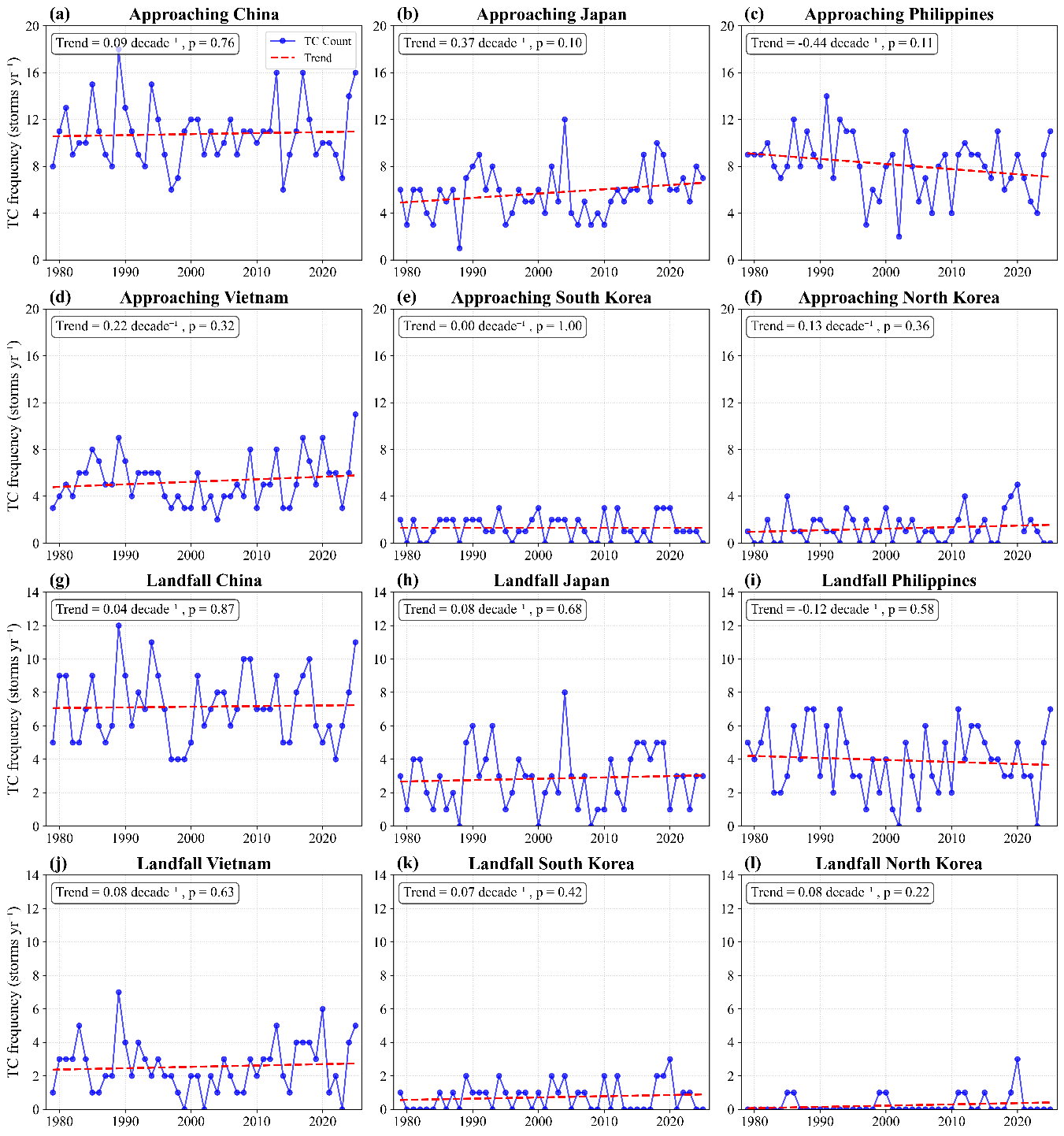
Trends in approaching TC frequency are weak and mostly insignificant, with marginal tendencies only for Japan (+0.37 decade⁻¹) and the Philippines (−0.44 decade⁻¹). Landfall frequencies show even weaker trends — no country exhibits a statistically significant change over 1979–2025.
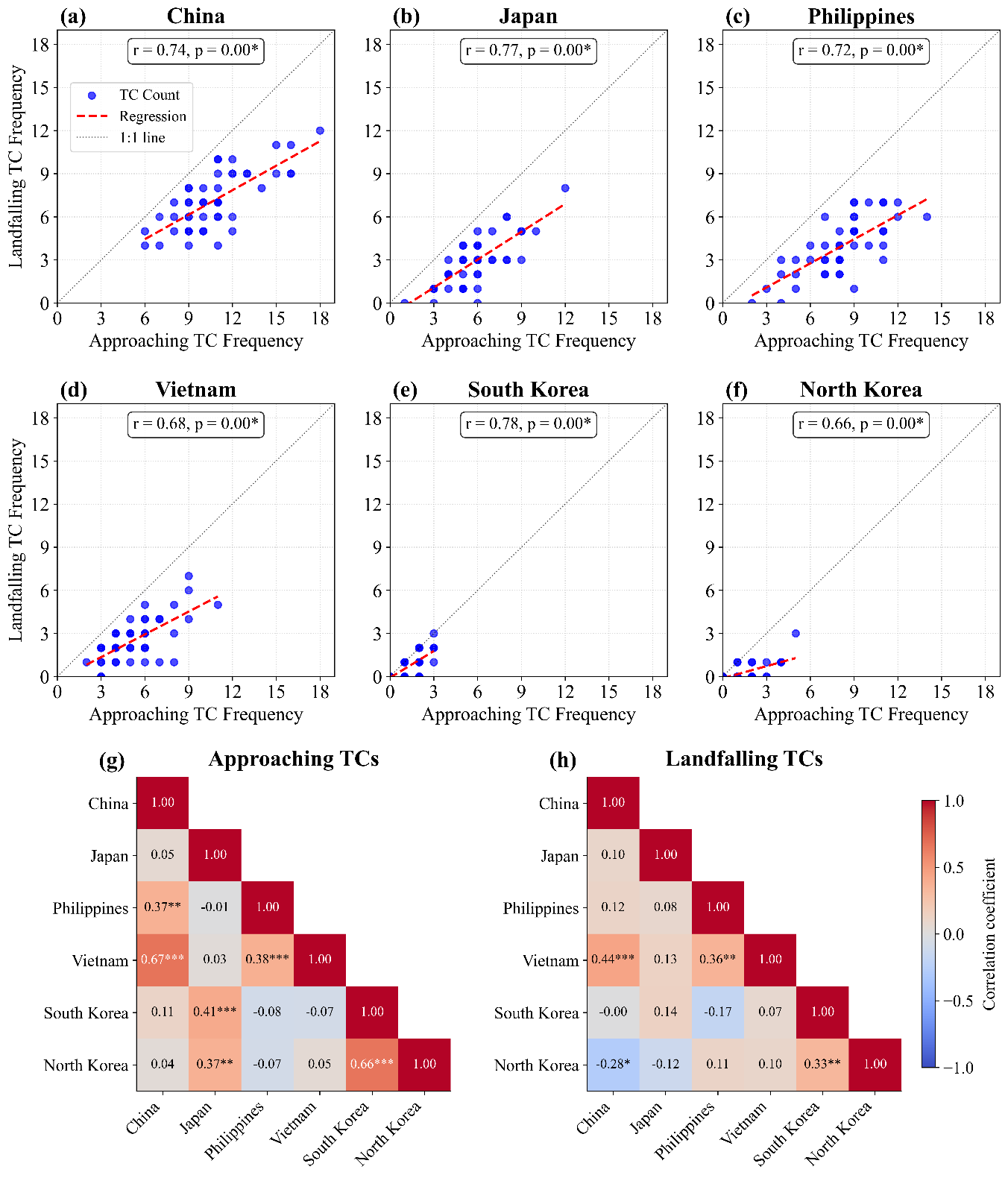
On interannual time scales, however, all six countries show strong positive correlations between approaching and landfalling frequencies, with r ranging from 0.66 (North Korea) to 0.78 (South Korea), all significant at the 99% level.
3.3 Why do approaching TCs make landfall or not?
Composite tracks reveal that approaching TCs do not necessarily make landfall. The two outcomes are associated with distinct post-approach behaviors:
Maintain trajectories toward the coastline after entering the 300-km buffer.
Recurve offshore or drift away from the target coast before landfall.
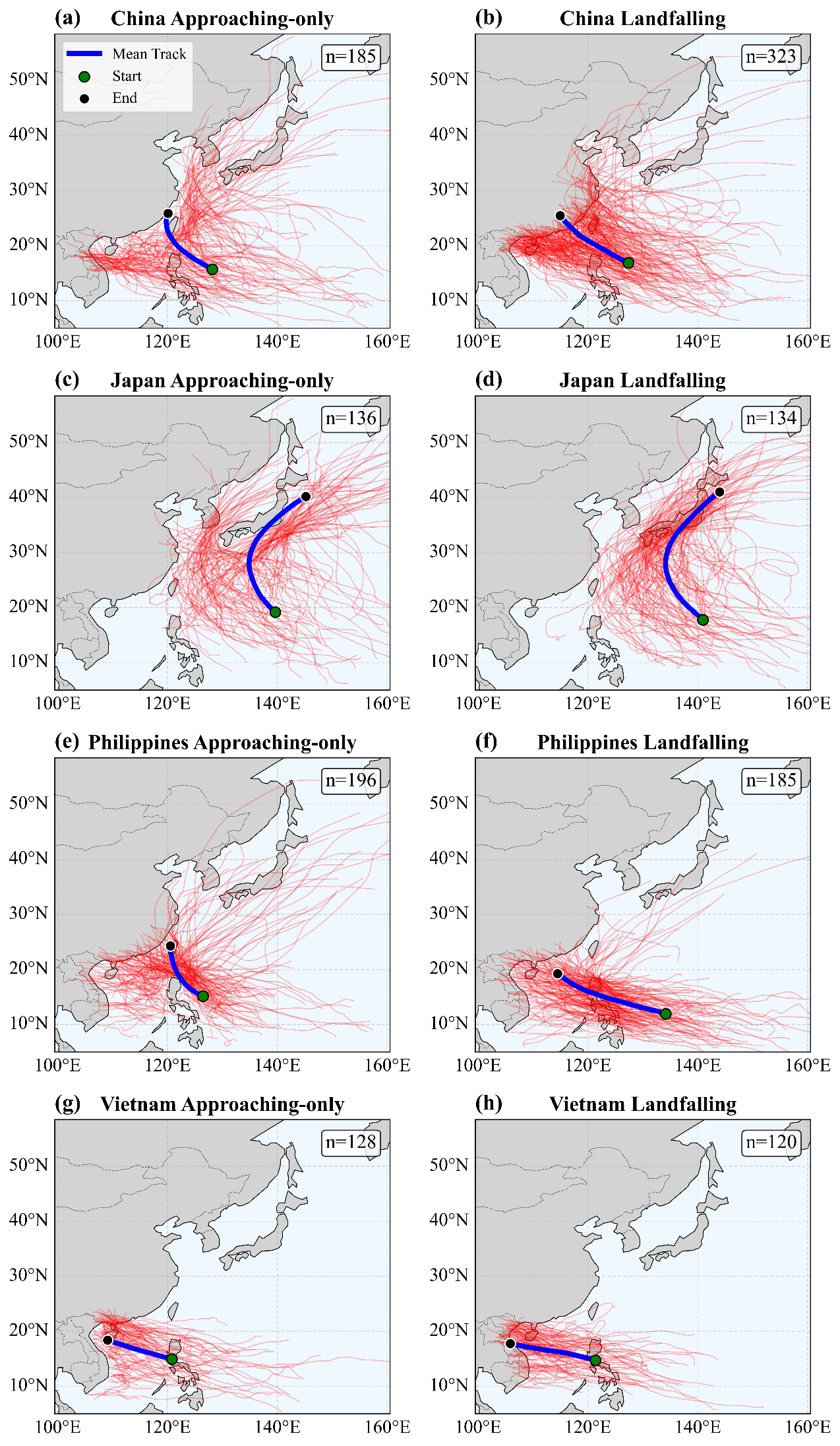
Regional contrasts are clear. For China, landfalling TCs take a more westward mean track and reach the coast, while non-landfalling systems recurve near Taiwan and the East China Sea. In the Philippines, the two groups originate from substantially different regions. For Japan and Vietnam, the differences are subtler but still systematic.
3.4 Evolution from genesis to coastal approach
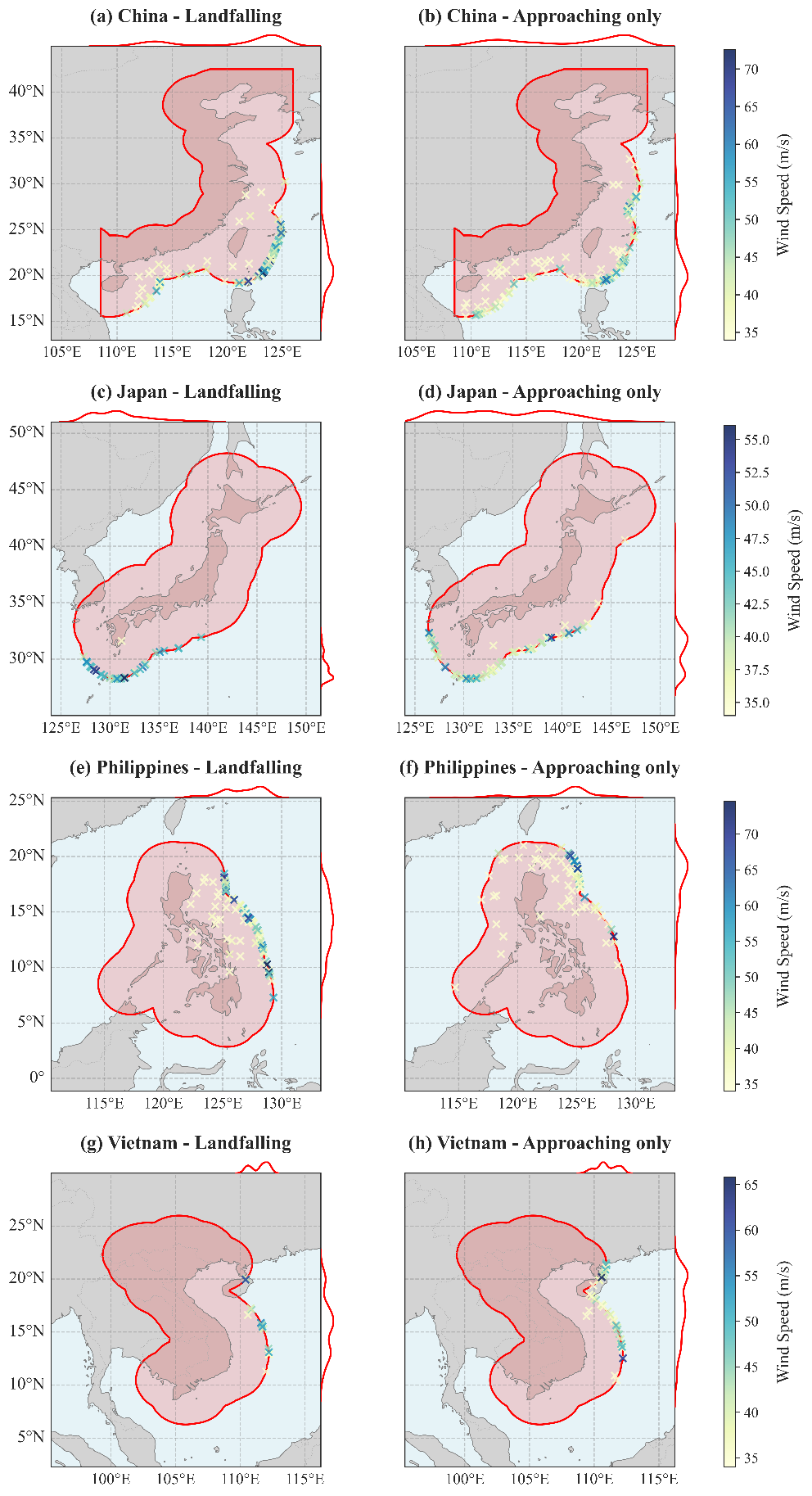
Differences between landfalling and non-landfalling TCs are already visible at the first approach location. Landfalling TCs tend to enter the buffer through more favorable locations and with stronger intensities.
Travel distance from genesis to first approach also differs systematically. The Philippines and Vietnam exhibit the shortest distances, while Japan, Korea, and North Korea show substantially longer oceanic propagation before coastal approach.
4. Discussion
Landfall is not an isolated event — it is the final outcome of a chain of processes extending from genesis. This section interprets the results through that process-oriented lens and outlines remaining uncertainties.
Previous studies have used landfall frequency as a primary indicator of regional TC impacts. But focusing on landfall alone implicitly treats it as a standalone event. Our results show that landfall counts are determined by two interconnected components:
How many TCs approach the coast — the frequency of coastal approach events.
How many of those approaching TCs actually convert into landfalls.
Countries with similar landfall frequency may reach that number through very different combinations of these two factors. Separating them gives a more complete picture of regional landfall activity.
Entering the 300-km coastal buffer does not guarantee landfall. Composite track analysis shows that the post-approach evolution distinguishes landfalling from non-landfalling systems:
Generally maintain trajectories toward the coastline after entering the buffer.
Tend to recurve offshore or drift away from the target coast before landfall.
Crucially, the divergence is not confined to the post-approach stage. Differences in genesis location, first approach location, intensity at approach, and pre-approach motion already emerge earlier in the life cycle — suggesting landfall efficiency is partly predetermined before the final approach.
The framework has practical implications: future changes in coastal TC risk may arise from changes in either approaching frequency or landfall efficiency, and separating them helps interpret regional differences under a changing climate.
- Buffer distance sensitivity. A 300-km buffer is a practical choice; testing 200 km or 400 km would assess robustness.
- Coastline representation. Hand-constructed boundaries may affect identification for complex coastlines such as Japan and the Philippines; higher-resolution datasets could refine this.
- Environmental controls. The roles of steering flow, subtropical high variability, and large-scale circulation require further investigation with reanalysis data.
- Climate change response. Future work could combine the framework with climate model projections to examine how warming modifies approaching activity and landfall efficiency.
5. Conclusions
This study introduces a process-oriented framework that separates coastal approach activity from landfall efficiency, providing a new perspective on TC landfall across six WNP coastal countries.
Landfall = exposure × efficiency
Climatological landfall frequency reflects both coastal exposure and the probability of transition from approach to landfall — neither alone is sufficient.
Approach drives interannual variability
Year-to-year changes in landfall activity are dominated by variations in approaching TC frequency, while landfall efficiency mainly shapes regional contrasts.
Post-approach motion matters
Landfalling TCs maintain coastal trajectories after entering the buffer; non-landfalling systems tend to recurve or drift offshore.
Divergence begins early
Differences between landfalling and non-landfalling TCs emerge from genesis and first approach — landfall is the final stage of a continuous process.
Acknowledgments: This work was supported by the China Scholarship Council (CSC) under Grant No. 202506100155.
Conflicts of Interest: The authors declare no conflict of interest.
References
- Bakkensen, L.A., Mendelsohn, R.O., 2016. Risk and adaptation: Evidence from global hurricane damages and fatalities. J. Assoc. Environ. Resour. Econ. 3, 555–587.
- Camargo, S.J., Sobel, A.H., 2005. Western North Pacific tropical cyclone intensity and ENSO. J. Clim. 18, 2996–3006.
- Camargo, S.J., Robertson, A.W., Gaffney, S.J., Smyth, P., Ghil, M., 2007. Cluster analysis of typhoon tracks. Part II. J. Clim. 20, 3654–3676.
- Chan, J.C.L., 2000. Tropical cyclone activity over the western North Pacific associated with El Niño and La Niña events. J. Clim. 13, 2960–2972.
- Chan, J.C.L., 2005. The physics of tropical cyclone motion. Annu. Rev. Fluid Mech. 37, 99–128.
- Chan, J.C.L., Shi, J.-E., 1996. Long-term trends and interannual variability in tropical cyclone activity over the western North Pacific. Geophys. Res. Lett. 23, 2765–2767.
- Colbert, A.J., Soden, B.J., Vecchi, G.A., Kirtman, B.P., 2013. The impact of anthropogenic climate change on North Atlantic tropical cyclone tracks. J. Clim. 26, 4088–4095.
- Elsner, J.B., Liu, K.-B., 2003. Examining the ENSO-typhoon hypothesis. Clim. Res. 25, 43–54.
- Emanuel, K., 2005. Increasing destructiveness of tropical cyclones over the past 30 years. Nature 436, 686–688.
- Dönmez, S., Tekeli, A.E., 2017. A fast intensity simulator for tropical cyclone risk analysis. Nat. Hazards 88, 779–796.
- Fudeyasu, H., Iizuka, S., Matsuura, T., 2006. Impact of ENSO on landfall characteristics of tropical cyclones over the western North Pacific. Geophys. Res. Lett. 33, L21815.
- Fudeyasu, H., Hirose, S., Yoshioka, H., Kumazawa, R., Yamasaki, S., 2015. A global view of the landfall characteristics of tropical cyclones. Trop. Cyclone Res. Rev. 3, 178–192.
- Gray, W.M., 1968. Global view of the origin of tropical disturbances and storms. Mon. Weather Rev. 96, 669–700.
- Holland, G.J., 1983. Tropical cyclone motion: Environmental interaction plus a beta effect. J. Atmos. Sci. 40, 328–342.
- Knapp, K.R., Kruk, M.C., Levinson, D.H., Diamond, H.J., Neumann, C.J., 2010. The International Best Track Archive for Climate Stewardship (IBTrACS). Bull. Am. Meteorol. Soc. 91, 363–376.
- Knutson, T., Camargo, S.J., Chan, J.C.L., Emanuel, K., Ho, C.-H., Kossin, J., et al., 2020. Tropical cyclones and climate change assessment: Part II. Bull. Am. Meteorol. Soc. 101, E303–E322.
- Kossin, J.P., Emanuel, K.A., Vecchi, G.A., 2014. The poleward migration of the location of tropical cyclone maximum intensity. Nature 509, 349–352.
- Kossin, J.P., Emanuel, K.A., Camargo, S.J., 2016. Past and projected changes in western North Pacific tropical cyclone exposure. J. Clim. 29, 5725–5739.
- Kossin, J.P., Knapp, K.R., Olander, T.L., Velden, C.S., 2020. Global increase in major tropical cyclone exceedance probability over the past four decades. Proc. Natl. Acad. Sci. U.S.A. 117, 11975–11980.
- Lee, T.-C., Knutson, T.R., Nakaegawa, T., Ying, M., Cha, E.J., et al., 2020. Third assessment on impacts of climate change on tropical cyclones in the Typhoon Committee Region. Trop. Cyclone Res. Rev. 9, 1–22.
- Lu, X., Yu, H., Ying, M., Zhao, B., Zhang, S., Lin, L., et al., 2021. Western North Pacific tropical cyclone database created by the China Meteorological Administration. Adv. Atmos. Sci. 38, 690–699.
- Mei, W., Xie, S.-P., 2016. Intensification of landfalling typhoons over the northwest Pacific since the late 1970s. Nat. Geosci. 9, 753–757.
- Nakazawa, T., Rajendran, K., 2007. Relationship between tropospheric circulation over the western North Pacific and tropical cyclone approach/landfall on Japan. J. Meteorol. Soc. Jpn. 85, 101–114.
- Park, D.-S.R., Ho, C.-H., Kim, J.-H., Kim, H.-S., 2011. Strong landfall typhoons in Korea and Japan in a recent decade. J. Geophys. Res. 116, D07105.
- Peduzzi, P., Chatenoux, B., Dao, H., De Bono, A., Herold, C., Kossin, J., et al., 2012. Global trends in tropical cyclone risk. Nat. Clim. Change 2, 289–294.
- Pielke, R.A., Jr., Gratz, J., Landsea, C.W., Collins, D., Saunders, M.A., Musulin, R., 2008. Normalized hurricane damage in the United States: 1900–2005. Nat. Hazards Rev. 9, 29–42.
- Walsh, K.J.E., McBride, J.L., Klotzbach, P.J., Balachandran, S., Camargo, S.J., Holland, G., et al., 2016. Tropical cyclones and climate change. Wiley Interdiscip. Rev. Clim. Change 7, 65–89.
- Wu, L., Wang, B., 2004. Assessing impacts of global warming on tropical cyclone tracks. J. Clim. 17, 1686–1698.
- Wu, L., Zhao, H., 2012. Dynamically derived tropical cyclone intensity changes over the western North Pacific. J. Clim. 25, 89–98.
- Xu, M., Zhan, R., Zhao, J., 2024. Distinct responses of tropical cyclone activity to spatio-uniform and nonuniform SST warming patterns. Environ. Res. Lett. 19, 064020.
- Yamaguchi, M., Maeda, S., 2020. Increase in the number of tropical cyclones approaching Tokyo since 1980. J. Meteorol. Soc. Jpn. 98, 775–786.
- Ying, M., Zhang, W., Yu, H., Lu, X., Feng, J., Fan, Y., et al., 2014. An overview of the China Meteorological Administration tropical cyclone database. J. Atmos. Oceanic Technol. 31, 287–301.